The RevOps Stack in 2025: Why You Need an AI Intelligence Layer (Not More Tools)
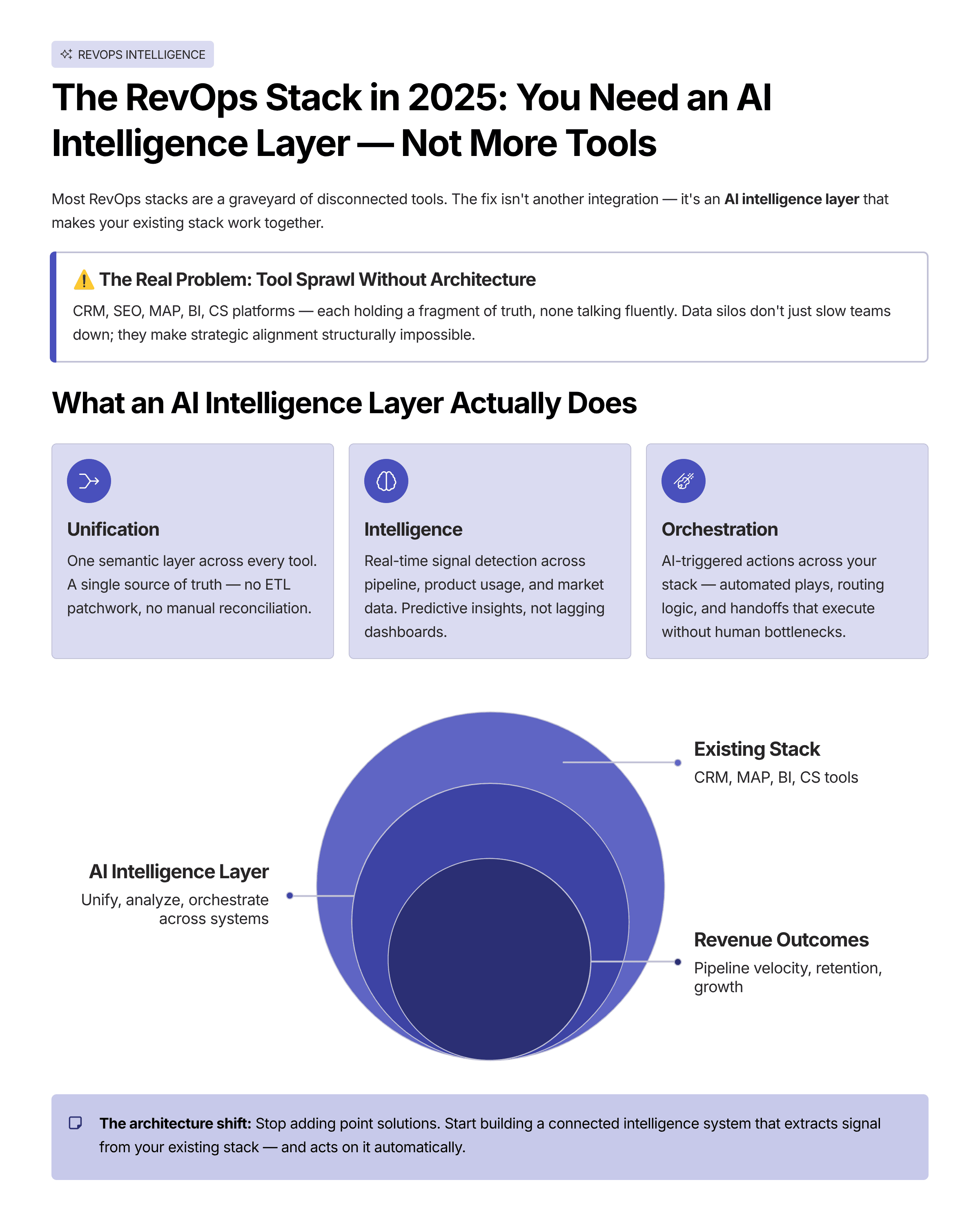
The Real RevOps Problem: Tool Sprawl Without Architecture
The average mid-market company uses 130+ SaaS tools. Their RevOps team manages integrations between a fraction of those — and spends a significant portion of their time manually reconciling data between them. Marketing says a lead is qualified. Sales says it isn't. Customer success doesn't know what was promised in the sales call.
The answer the market keeps selling is "add another tool." The actual answer is architecture.
What an AI Intelligence Layer Is
An AI intelligence layer isn't a product you buy. It's a system design pattern. It sits across your existing tools and performs three functions:
- Unification: Reads from all your data sources and creates a single operational view
- Intelligence: Applies AI to that unified data to generate signals (lead scores, churn risk, deal health)
- Orchestration: Triggers actions in your existing tools based on those signals — without manual intervention
The Three-Pillar Architecture
Pillar 1: Marketing Ops
Your marketing stack (HubSpot, Marketo, Google Ads, LinkedIn) feeds intent signals and engagement data into the intelligence layer. The AI synthesises this into a lead readiness score that updates in real time — not a static MQL threshold set 18 months ago.
Pillar 2: Sales Ops
Your CRM (Salesforce, HubSpot CRM, Pipedrive) and sales engagement tools (Outreach, Salesloft, Gong) feed deal progression data. The intelligence layer identifies deals at risk, surfaces the right next action, and automates follow-up sequences when reps go dark.
Pillar 3: Customer Success
Your CS tools (Gainsight, ChurnZero, Intercom) feed product usage and health scores. The intelligence layer identifies at-risk accounts 30-60 days before they show intent to churn — enabling proactive intervention rather than reactive damage control.
What Connects the Pillars: The Orchestration Engine
The orchestration engine is typically built on n8n, Make, or custom API integrations — depending on your data volume and compliance requirements. It's triggered by events across all three pillars and executes actions across them. A customer health score dropping below threshold in Pillar 3 can trigger an alert to the account manager in Pillar 2 and pause marketing sequences in Pillar 1 — automatically.
Why This Isn't a Job for Junior Developers
Building this correctly requires understanding your revenue model first and your tech stack second. The architecture decisions — what data to trust, how to handle conflicts between systems, what to automate vs. what to route to humans — are business logic decisions that compound into significant outcomes. A mis-scored lead routed incorrectly isn't just a lost sale. It's a data problem that compounds.